
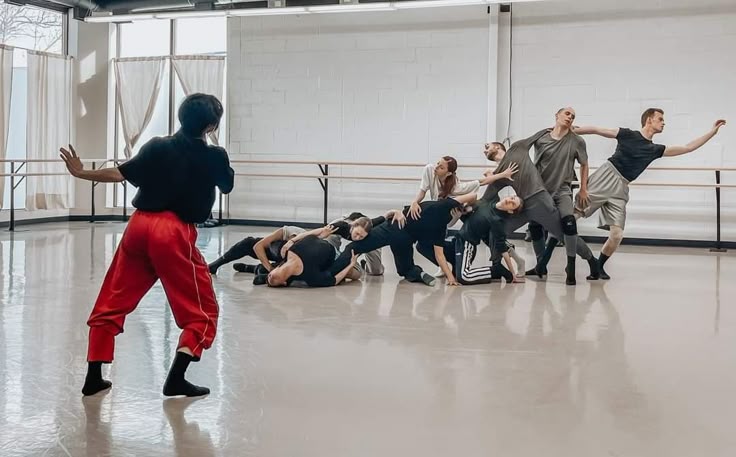
Hi, I’m Nikita Barinov, a dance and music producer currently based in Manchester. In this article, I’d like to share my experience of applying for the UK Global Talent Visa through the Arts and Culture route, what the process involved, and what helped me receive a successful endorsement.
If you’re considering this visa yourself, I hope my experience gives you a clearer understanding of what’s required and how to approach your application.
Choosing the Right Route
The UK Global Talent Visa is available across several fields, with the main categories including Digital Technology, Arts and Culture, and Academia or Research.
I applied under the Arts and Culture pathway, which is divided into several endorsing routes, including PACT, RIBA, and Arts Council England. My application was submitted through Arts Council England – Combined Arts, covering dance, music, theatre, literature, and visual arts.
This turned out to be the right route for my professional background, and it’s the one through which I ultimately received my endorsement.
Exceptional Talent vs Exceptional Promise
There are two levels of endorsement under the Global Talent Visa.
Exceptional Talent is intended for recognised leaders in their field. It is generally granted for three years and can lead to settlement in the UK.
Exceptional Promise is designed for emerging leaders who have already demonstrated significant achievement and strong potential for future impact. This route is typically granted for five years and also provides a pathway to settlement.
While Exceptional Talent carries greater prestige, it also requires stronger evidence of established leadership. Exceptional Promise is often a more realistic option for professionals who have already built an impressive portfolio but are still developing their international profile.
What You Need for an Arts and Culture Application
Every application must include several core documents:
- A professional CV outlining your experience and achievements.
- Three letters of recommendation, including at least one from a UK-based organisation.
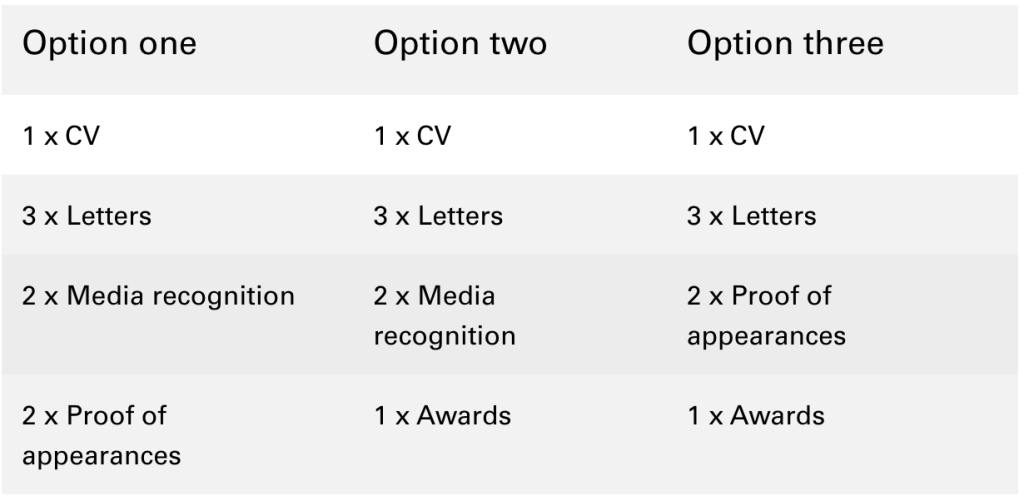
In addition, applicants must meet the evidence requirements by choosing one of the accepted combinations.
Option 1
- Two examples of media recognition.
- Two examples of professional appearances.
Option 2
- Two examples of media recognition.
- One recognised professional award.
Option 3
- Two examples of professional appearances.
- One recognised professional award.
One of the biggest misconceptions is that you need evidence across every category. You don’t. As long as you satisfy one of the approved combinations alongside the mandatory documents, your application can be considered.
Understanding the Evidence Requirements
The quality of the evidence matters just as much as the quantity.
For media recognition, publications should come from established journalists or professional arts critics rather than bloggers, influencers, or self-published platforms. This is one of the most common reasons otherwise strong applications fall short.
Awards should represent genuine professional recognition. So-called vanity awards – those that require payment or effectively sell recognition – are generally not considered suitable evidence.
Applicants also need to demonstrate evidence across at least two of the three key categories:
- Media recognition
- Awards
- Professional appearances
What My Application Included
Although only the minimum evidence is required, I was fortunate to have material across all three categories.
My application included:
- Three recommendation letters.
- Three media publications written by professional arts critics.
- Five event announcements and programmes confirming my participation in performances and projects.
Once everything was assembled, I had my documents professionally translated into English where necessary, completed the required certifications, paid the endorsement fee (which at the time required an international bank card), and submitted the application.
Waiting for the Decision
The official guidance states that endorsement decisions are usually made within eight weeks.
In my case, it took around ten weeks.
I received an email early in the process explaining that there were delays and asking applicants to be patient, so the additional waiting time wasn’t unexpected.
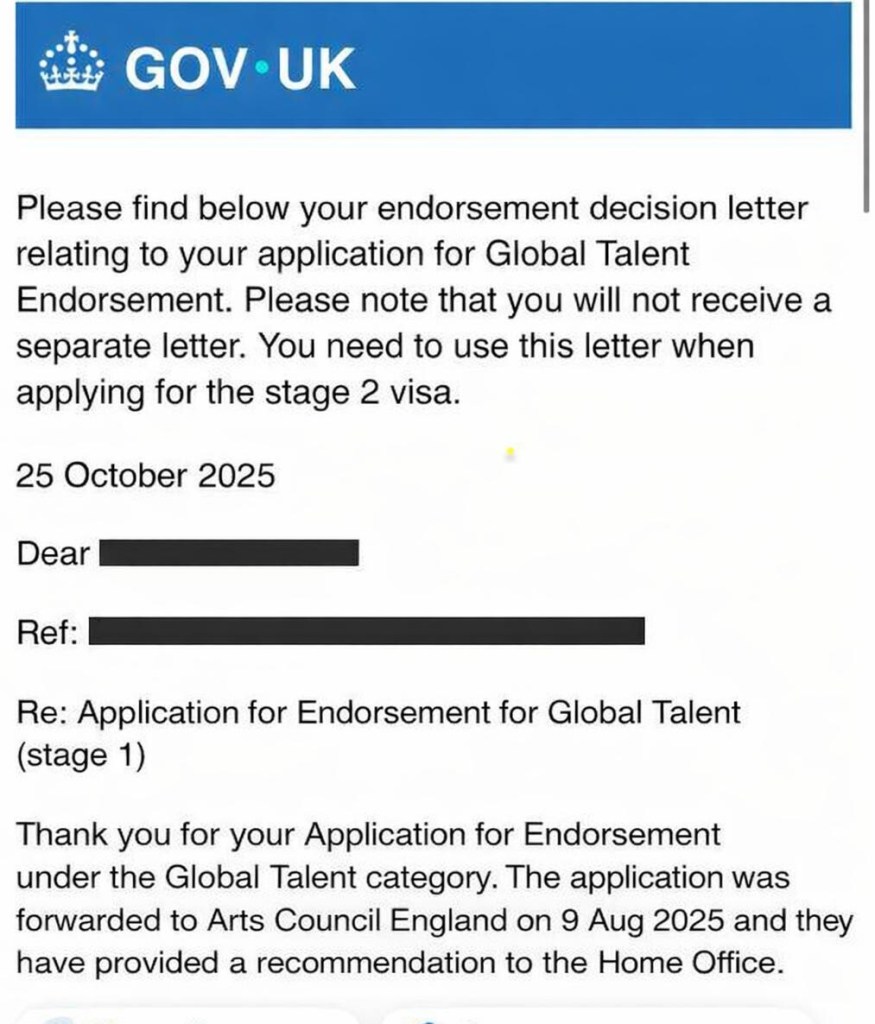
Finally, on 25 October 2025, I received the email confirming that my endorsement had been approved.
It was one of those messages you read several times before it truly sinks in.
Looking Back
The Global Talent Visa exists to attract both established professionals and emerging creatives who are expected to contribute to the UK’s cultural landscape in the years ahead.
For applicants under the Exceptional Promise route, assessors aren’t looking solely at what you’ve already achieved – they’re also evaluating your future potential. For musicians, producers, and performing artists, that often means demonstrating a consistent track record through professional performances, festival appearances, respected media coverage, and meaningful industry recognition.
Looking back, the application process was about much more than completing paperwork. It forced me to organise my portfolio, gather recommendations from respected professionals, and take a step back to assess everything I had accomplished so far.
Today, I’m living in Manchester and continuing to develop new dance and music projects. Receiving the Global Talent Visa wasn’t the end of the journey – it was the beginning of an exciting new chapter.
Text by Nikita Barinov
P.S. To avoid these common mistakes and improve your chances of getting endorsed, book a consultation with Globali.uk by globali.uk@proton.me.
